


Pashka form “Flowers” (No. 5-6. P.I.)
45,00 €
Pasha is a pyramid-shaped sweet holiday dish prepared for Easter in Orthodox countries.
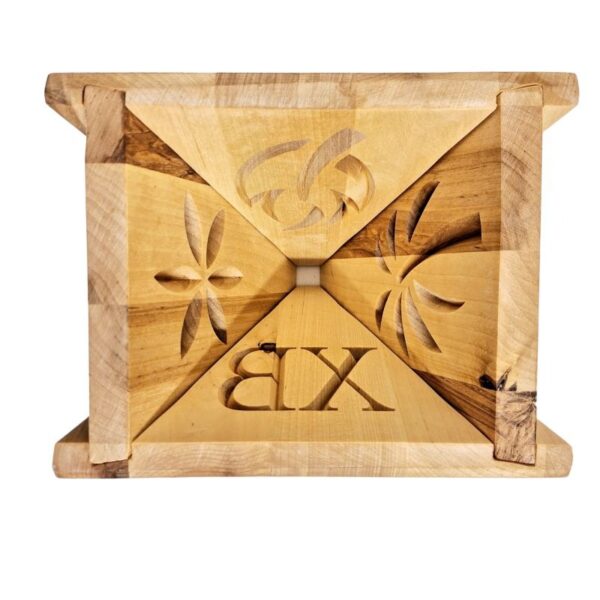
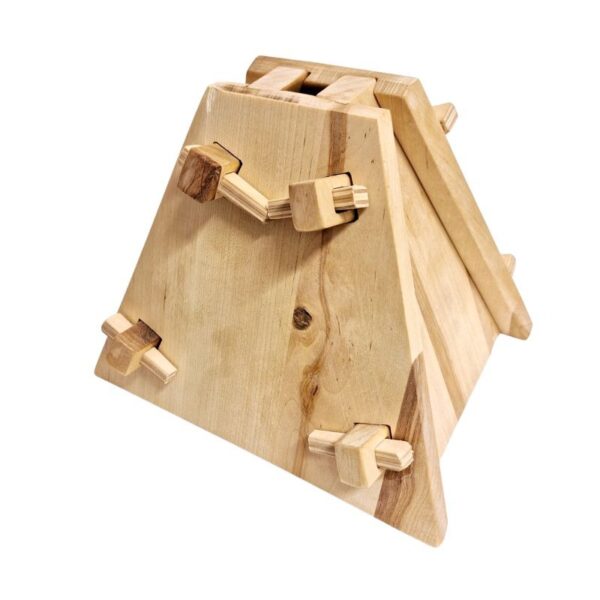
Classic pasha is prepared in a very unique wooden mold with carved decorations.
The Church Slavonic initials “XB” are cut into the sides of the product, meaning “Hristos voskrese!” (‘Christ is risen!’), which are transferred to the sides of the food when the mold is opened.
The floral motif on the pasha mold symbolizes the beginning of spring and new life.
This mold is made of glued birch plywood.
Holds 800 g and is 17 cm high.
Pasha mold care and use:
Cleaning: Wash the mold immediately after removing the pasha so that the curd does not dry in the corners and between the letters (XB).
Mold care: Wash by hand, use a gentle dishwashing detergent if necessary.
Do not soak the wooden mold in water, as this can cause the wood to swell or break. Air dry carefully.
Storage: Store the mold in a dry place to prevent the wood from becoming moldy.
Preparation: Always line the mold with damp cheesecloth before pouring the pasha mass, this will make it easier to clean the mold later.
In the case of a wooden mold, the wood can be treated with cooking oil (e.g. linseed oil) from time to time to maintain its durability.
- Description
- .
Description

Estonian
Recipe:
100 g of soft butter
1 dl of sugar
500 g of room temperature curd
1-2 tablespoons of lemon juice
1 egg if desired
1 teaspoon of high-quality vanilla extract
0.5 dl chopped pistachios
100 g of dried cranberries
2 dl 35% heavy cream
Preparation
Beat soft butter with sugar until creamy. Add room temperature and previously mixed curd, egg and seasonings. Gently fold in the whipped cream.
Transfer the mixture to a cheesecloth-lined baking dish to drain, if desired, apply pressure. Keep cool.
The next day, invert the pasha onto a platter, remove the cheesecloth and decorate, for example, with physalis and crushed pistachios.